As tensions in the Red Sea persist, maritime insurers and risk managers are increasingly aligned on one point: elevated war risk premiums are unlikely to disappear in the near term. Even with partial reopening or temporary de-escalation, uncertainty itself has become a cost factor — one that shipping companies must continue to absorb as long as volatility remains.
For vessel operators, Red Sea transits now carry an additional, structurally embedded expense. War risk premiums may ease gradually, but a return to pre-crisis levels appears unlikely. As a result, margins are under pressure not only from insurance costs, but also from the broader operational adjustments required by prolonged risk exposure.
Rising Premiums, Lower Tolerance for Inefficiency
Insurance specialists note that war risk premiums respond less to isolated incidents than to sustained instability. As long as routes remain exposed to sudden disruption, unpredictability is priced in — and shipowners pay for it voyage after voyage.
This has a secondary effect: when baseline costs rise, tolerance for operational inefficiency falls. Factors that increase fuel consumption, emissions, or off-hire risk become harder to justify, as they compound an already elevated cost structure. Risk management, therefore, is extending beyond routing and insurance decisions into day-to-day vessel condition and performance control.
Operational Exposure Goes Beyond Insurance
Rerouting, extended waiting, or speed adjustments around high-risk regions often lead to longer idle periods, anchorage time, or slow steaming — all of which quietly affect hull condition. Early-stage fouling can accumulate during these periods, increasing drag and fuel consumption once vessels return to full service.
While insurance premiums are clearly visible line items, efficiency losses from hull degradation are less obvious but no less material. Over time, they translate into higher bunker costs, higher emissions, and reduced operational flexibility — particularly when vessels are redeployed under tight schedules.
Where Control Still Exists
Against a backdrop of elevated risk premiums and limited control over geopolitical factors, shipowners are increasingly focusing on what remains controllable: vessel performance consistency.
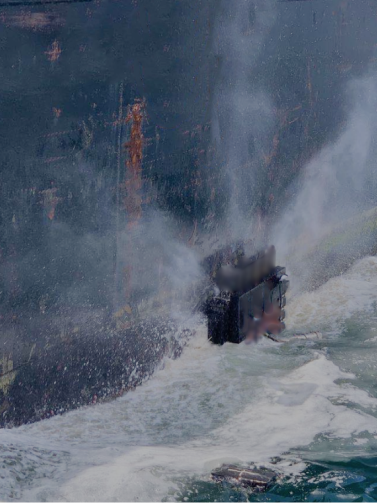
In this context, underwater robotic hull cleaning is gaining relevance as a risk-mitigation tool rather than a discretionary service. Neptune Robotics’ hull cleaning services enable operators to maintain hull condition during non-ideal operating windows — including anchorage, low-visibility waters, night operations, and congested ports.
By supporting condition-based, timely hull maintenance even where conventional methods are constrained, such approaches help prevent efficiency losses from compounding during periods of operational disruption.