The Brazilian maritime authorities have postponed the full enforcement and penalty phase of the ship hull biofouling management regulation (NORMAM-401/DPC) to 10 June 2026. While fines and sanctions are temporarily deferred, the regulatory direction is now crystal clear:
Vessels entering Brazilian waters must maintain “clean hulls” (Biofouling Rating ≤1) prior to navigation and when transiting between regions, supported by complete and verifiable management records, fully aligned with the IMO 2023 Biofouling Guidelines.
The postponement does not signal regulatory leniency. Rather, it provides a transparent window for operators to adapt their operational systems, ensuring sustainable compliance before enforcement begins.
From Regulatory Compliance to Verifiable Hull Condition
With the formal introduction of Chapter 4 of NORMAM-401/DPC on biofouling management, Brazilian authorities are shifting focus from document presence to actual, verifiable hull condition.
Key regulatory requirements directly impact operational practices:
Scope of Application:
– Applies to all vessels over 24 meters navigating, mooring, or anchoring in Brazilian internal waters, territorial seas, and the EEZ.
Mandatory Documentation:
– Biofouling Management Plan (BFMP)
– Biofouling Record Book (BFRB)
– Documents must be carried onboard and available for inspection.
Hull Cleanliness Standards:
– Rating 0–1: No biofouling or only microbial slime — vessel may navigate normally.
– Rating >1: Macrofouling present — hull must be cleaned before navigation.
Regional Sensitivity:
– Brazilian coastal waters are divided into three biogeographic regions.
– Cross-region navigation will trigger stricter inspection of hull condition.
In-Water Cleaning Restrictions:
– Allowed only if pollutants are fully captured during cleaning.
– Requires prior approval from maritime and port authorities.
These requirements mean that “last-minute cleaning at port” or “clean only when judged necessary” approaches are no longer viable.
Neptune Robotics: Turning Compliance Into Controllable Daily Operations
In this regulatory environment, the challenge is not merely understanding the rules, but sustaining hull condition at Rating ≤1 without relying on temporary windows or increasing operational volatility.
This is where Neptune Robotics delivers structural operational value:
1. Proactive, Condition-Based Inspection and Cleaning
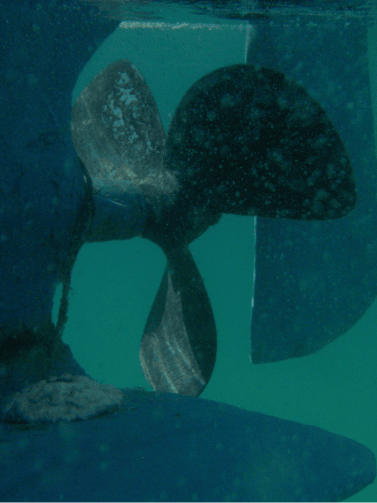
– Regular, visual hull inspections by underwater robots allow intervention before macrofouling forms, avoiding reactive compliance.
– Leveraging our operational network covering all ports in China and Singapore, we provide fleets with frequent, timely inspections and cleaning, ensuring hull condition is consistently maintained at Rating ≤1.
2. Adaptation to Complex Operational Scenarios
– Capable of operations at anchorages, at night, in low-visibility waters, and in port-limited environments, reducing dependence on port conditions.
3. Biofouling Compliance for Global Fleets
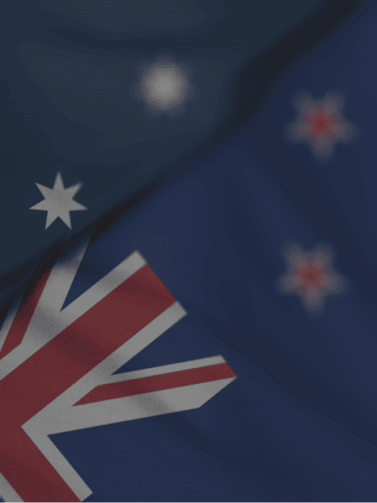
– Proven Compliance Track Record: 100% successful entry in New Zealand and 100% successful entry in Australia.
– Supports fleets operating across multiple jurisdictions, ensuring consistent compliance with international biofouling regulations.
4. Direct Support for BFMP / BFRB Documentation
– Inspection records, cleaning timestamps, and results serve as verifiable evidence for regulatory audits.
– Seamlessly integrates with onboard compliance management plans and record books.
For fleets preparing for the 2026 enforcement deadline, the advantage lies not in “speed of last-minute cleaning,” but in minimizing the need for urgent hull interventions through routine, predictable maintenance.
As Brazil transitions from a guidance phase to enforcement, hull condition management is evolving from a maintenance task into a core operational capability. Continuous, controllable, and documented robotic solutions are rapidly becoming an essential component of compliance strategies.