Last month’s negotiations at the International Maritime Organization (IMO) ended without consensus on a global carbon pricing mechanism for shipping. But this setback has not slowed the momentum toward decarbonization. IMO Secretary-General Arsenio Dominguez reaffirmed shortly afterward that member states remain committed to advancing the Net-Zero Framework, and that carbon pricing continues to be a central instrument for achieving meaningful emissions reductions.
Fuel Efficiency as a Financial Metric
Under a future carbon pricing regime, every additional tonne of CO₂ emitted will directly increase operating costs. This shift transforms fuel efficiency from a technical indicator into a core financial metric. Fleet performance measures such as EEOI and CII will play a much more visible role in determining profitability, influencing charterer preferences, and shaping tax exposure once carbon levies begin.
This also heightens the management risk associated with any factor that increases hull resistance. Fouling accumulation, variations in loading conditions, and the hydrodynamic challenges of specific trade routes will all have immediate cost implications. Inefficiencies that were once considered operational noise will be monetized and recorded, making proactive performance management a financial necessity rather than an optional optimization.
Hull Fouling: The Hidden Trigger of Carbon Cost
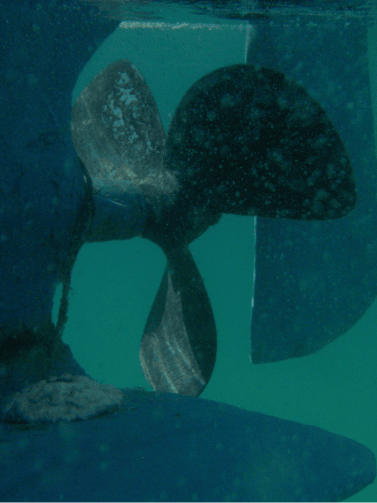
Hull fouling is becoming one of the most underestimated drivers of future carbon-related expenses. Moderate fouling can raise fuel consumption by 5% to 10%, while heavy fouling can push that figure beyond 20%. Under potential carbon price ranges of €20 to €50 per tonne of CO₂, these inefficiencies translate into quantifiable and recurring cost penalties on every voyage.
Previously, small increases in fuel use were easily absorbed or overlooked. In a carbon-constrained framework, they become accountable and billable. This shift challenges the industry’s traditional low-frequency hull cleaning cycle, which is often dictated by schedules, weather, and port availability. To sustain competitive carbon efficiency, shipowners will need maintenance solutions that are predictable, weather-agnostic, and capable of supporting higher cleaning frequency without disrupting operations.
Neptune Robotics: A Practical Enabler of Energy-Efficiency Maintenance
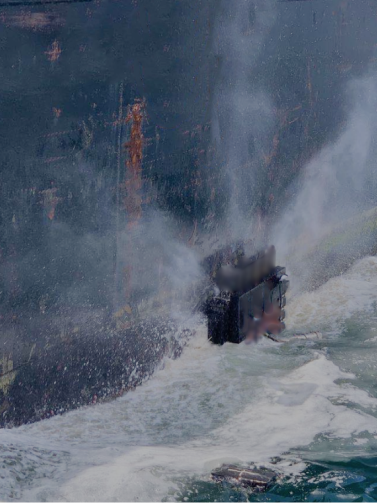
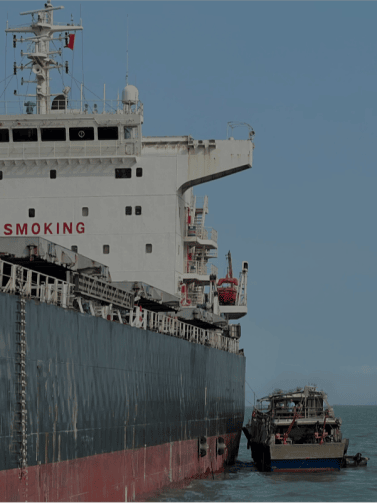
Within this evolving landscape, Neptune Robotics is not simply a service provider but a foundational part of a shipowner’s carbon-efficiency strategy. Its robotic cleaning technology has been operating continuously across 61 ports in China and Singapore, regardless of visibility, water quality, seasonal conditions, or day-night cycles. This reliability ensures that fleets can maintain stable performance even in environments traditionally considered unsuitable for underwater operations.
Neptune’s cavitation jet technology protects hull coatings and reduces the long-term cost of repainting, while the consistency of robotic operations produces verifiable, transparent records of hull condition and cleaning quality. This level of visibility is increasingly aligned with the expectations of ports, regulators, charterers, and financial institutions, all of whom are placing greater emphasis on measurable environmental performance.
Key stakeholders across global shipping are converging on the expectation of cleaner hulls, transparent emissions data, higher operational efficiency, and lower environmental risk. Neptune Robotics enables shipowners to develop these capabilities ahead of regulatory deadlines, positioning fleets to navigate the transition from compliance-driven requirements to performance-driven competitiveness.