As container shipping looks toward the 2030s, competitive advantage is being redefined. Overcapacity, volatile trade flows, and persistent congestion are forcing operators to rethink how fleet performance is managed under non-ideal conditions — not during peak efficiency, but during delay, waiting, and disruption.
Recent years have made one thing clear: vessels are spending more time at anchor, moving at reduced speeds, or operating within constrained port environments. These patterns expose a growing gap between fleets that can maintain performance through irregular operations and those that rely on periodic, schedule-based maintenance assumptions.
Volatility Shifts the Cost Equation
In a strong freight market, inefficiencies are often absorbed. In a volatile or correcting market, they become immediately visible.
Fuel consumption, emissions intensity, and hull efficiency now have a direct impact on voyage economics, charter competitiveness, and regulatory exposure. As rate volatility increases, the ability to control operational variables — rather than simply react to market cycles — becomes a decisive factor.
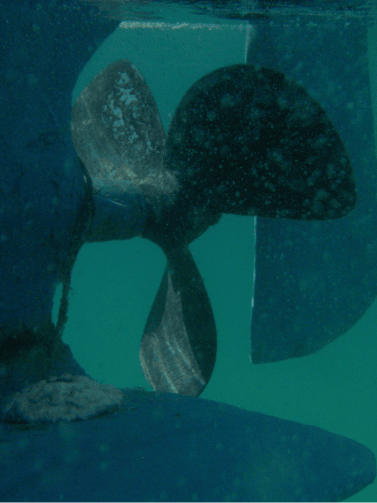
Hull condition sits quietly at the center of this equation. Light fouling accumulates fastest when vessels are slow, stationary, or frequently idling — exactly the operating profile created by congestion and network instability. By the time fuel penalties are visible, performance has already degraded.
Hull Maintenance Is Becoming Operations-Driven
The traditional approach to hull maintenance assumes predictable drydock cycles, clear water, and sufficient daylight or berth time. Those assumptions are increasingly misaligned with real operating conditions.
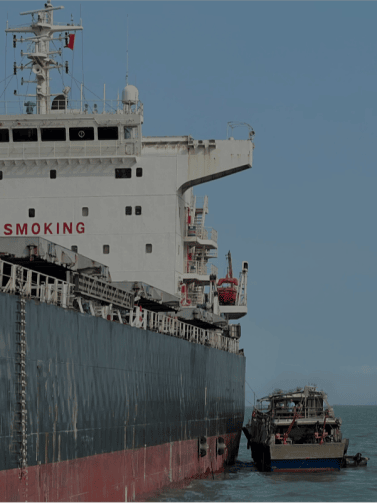
Today’s vessels often require intervention while at anchor, during short port calls, at night, or in highly turbid waters. In some cases, fouling develops not only below the waterline, but along vertical hull sections above it — areas typically left untreated by conventional in-water cleaning methods.
This shift is changing how operators evaluate maintenance capability. Flexibility, environmental tolerance, and coating protection are becoming as important as cleaning effectiveness itself.
Where Neptune Robotics Fits the Emerging Model
It is within this context that Neptune Robotics’ approach becomes relevant. Rather than positioning hull cleaning as a periodic task, Neptune’s robotic systems are designed to operate under real-world constraints: in zero-visibility or highly turbid waters, at anchorages, during night operations, and in restricted port environments.
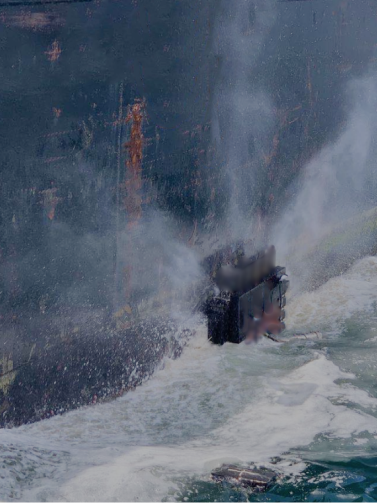
Importantly, Neptune’s robots are also capable of cleaning several meters above the waterline — addressing vertical hull areas that are increasingly exposed during prolonged port stays and that are often excluded from traditional underwater maintenance scopes.
The use of cavitation jet technology further aligns with this operations-driven model. By removing fouling while minimizing coating damage, it enables more frequent, low-impact intervention — allowing operators to manage hull condition proactively rather than reactively.
Positioning for the 2030s
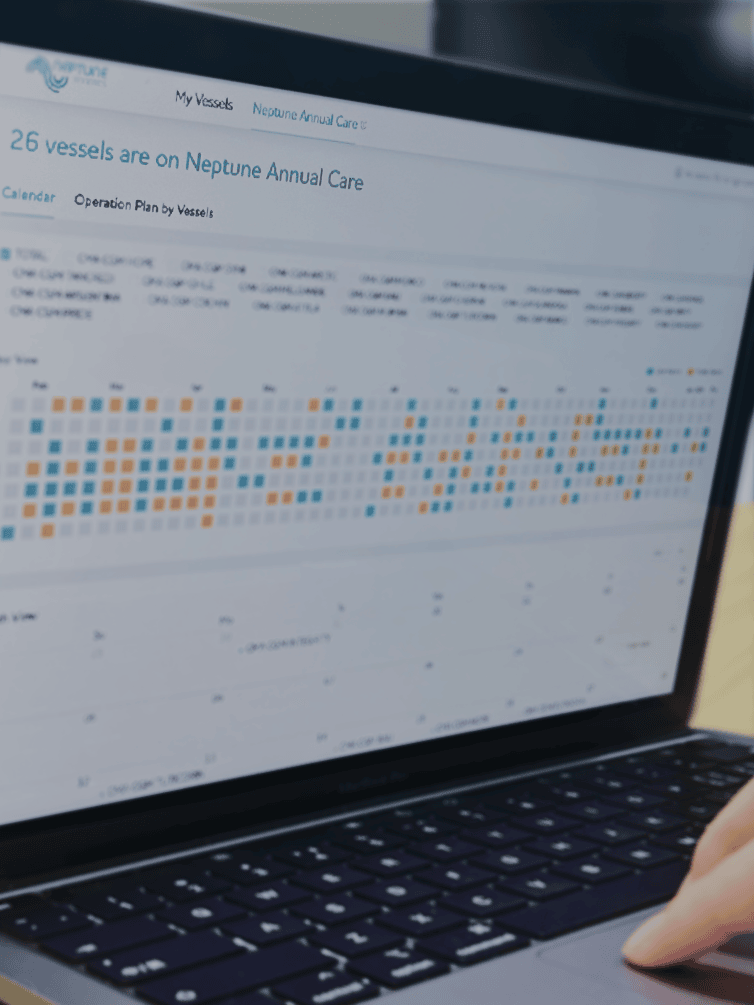
As the industry enters a decade defined by uncertainty rather than stability, fleet performance management is becoming a continuous discipline rather than a scheduled event.
Operators preparing for the 2030s are not simply asking how to clean hulls, but how to preserve energy efficiency across unpredictable operating patterns, tighter environmental regulation, and rising scrutiny of emissions performance.
In that sense, technologies like robotic hull maintenance are no longer peripheral innovations. They are becoming part of the infrastructure that allows fleets to remain efficient, compliant, and commercially resilient — even when the operating environment is anything but.
The next decade will reward those who build adaptability into their operations early. For many fleets, that work is already beginning — quietly, incrementally, and below the surface.