— Insights from MSI on Energy Efficiency and Hull Maintenance
Global container trade in 2025 has outperformed expectations.
According to the latest analysis from Maritime Strategies International (MSI), demand resilience has proven stronger than anticipated earlier this year. In the first half of 2025, container trade grew by more than 4% year-on-year, with Asia-Europe and Transatlantic routes showing particularly strong performance. Despite some volatility on the Transpacific, volumes were still up nearly 6% year-to-date by August.
This performance sends a clear signal: global shipping is running at full throttle. More voyages and higher volumes mean greater fuel consumption and emissions—along with higher compliance risks under IMO’s Carbon Intensity Indicator (CII) and the EU Emissions Trading System (ETS).
A “Resilient Comeback” in Global Supply Chains
The MSI data reflects not just short-term recovery, but a broader global rebound:
China’s industrial surplus continues to flow outward, with exports to emerging markets seeing significant growth. Asia-Europe and Transatlantic routes remain robust, lifting overall transport demand. Long-haul non-Mainlane trades (Latin America, Middle East, Africa, Oceania) have also maintained steady growth over multiple years.
In short, 2025 is not about isolated improvements but a cross-regional, high-intensity operating environment. Ships are sailing more frequently, turnaround times in port are shorter, and operational pressure is rising. Under these conditions, hull fouling becomes a much bigger issue—directly impacting fuel consumption and emissions more severely than before.
Hull Cleaning: From Maintenance to Strategy
Against the backdrop of IMO CII and EU ETS regulations, keeping hulls clean is not just about saving money—it’s about staying compliant. For liner operators frequently calling at European or other carbon-priced regions, the stakes are even higher.
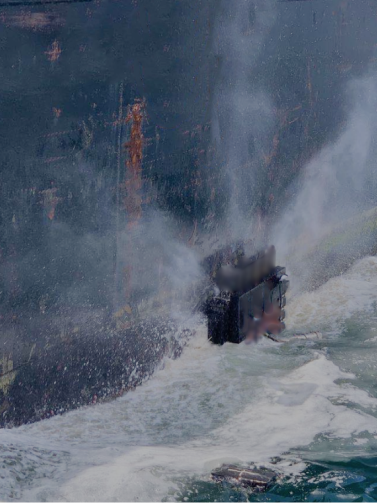
Robotic underwater hull cleaning is exactly this kind of “counter-cyclical” investment:
– No need to wait for drydocking—cleaning can be done flexibly during normal operations;
– Helps maintain efficiency in high-volume periods and reduces costs when freight rates fall;
– Significantly helps in aligning with IMO, EU, and other regional regulations.
The stronger-than-expected growth in global container trade is welcome news for the industry—but it also sharpens the urgency of the decarbonization challenge. In an era of expanding trade and tightening regulation, hull cleaning has shifted from being a maintenance task to a strategic tool for energy management.